For students
Plan access and water choices around different age groups, campus routes and short breaks.
School drinking water solution
School planning starts with how different student groups move across campus, where breaks create shared demand, and how facilities staff can keep points clean and serviceable through term time and holidays.
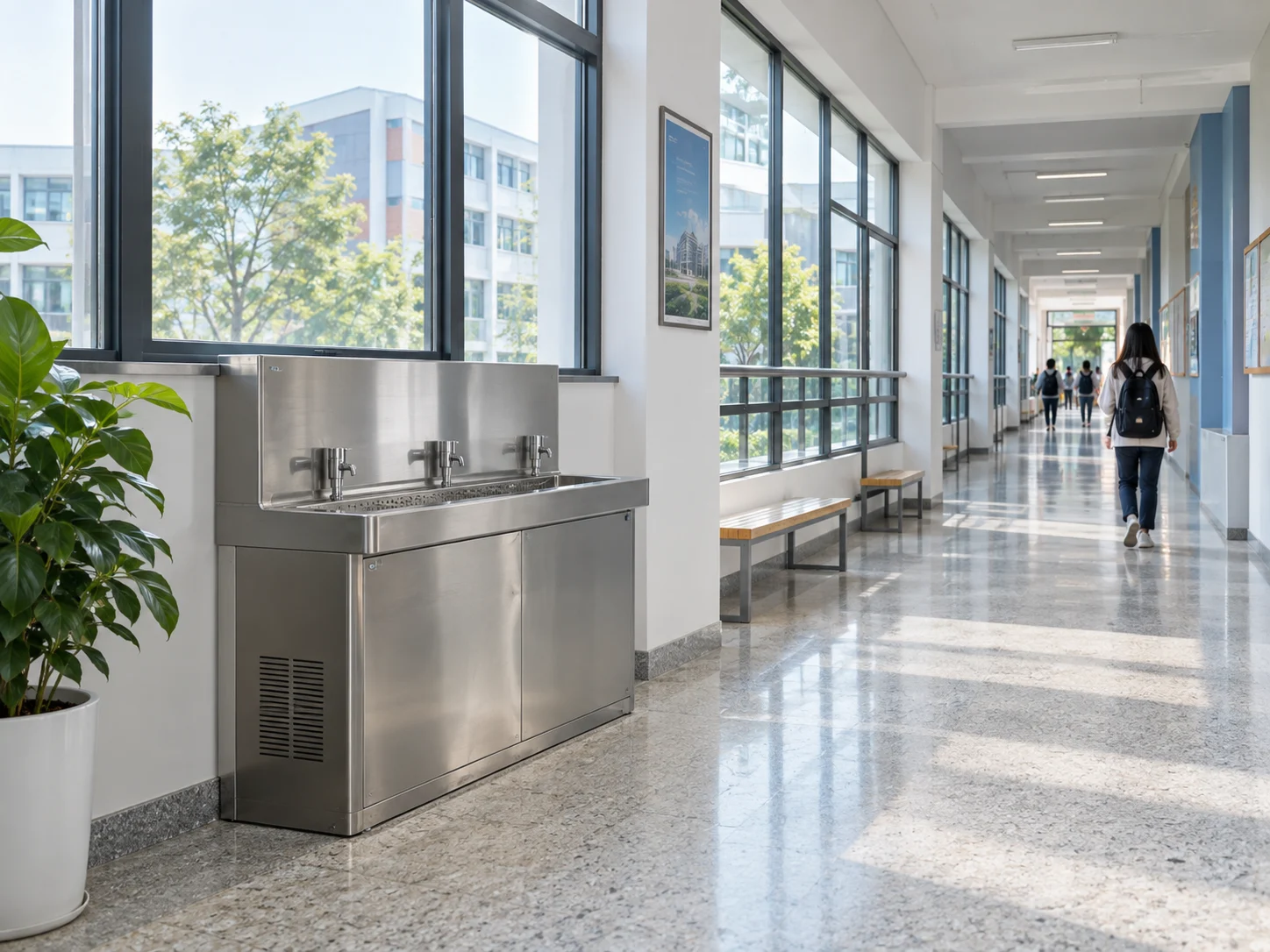
Students use shared points between lessons; teachers support campus routines; school procurement and facilities teams coordinate locations, installation, cleaning and maintenance.
Plan access and water choices around different age groups, campus routes and short breaks.
Coordinate point locations, cleaning and repair access with the school calendar.
Review bell schedules, student movement, point locations and observed queues rather than treating daily totals as the only measure.
Consider the actual user groups, access, operating routines and water choices in each building or school area.
Plan circulation and point placement with school staff; no single layout or equipment count fits every campus.
Coordinate cleaning, filter checks, repairs and service access during term time, breaks and school holidays.
Compare observed break-time use with campus layout, water and utility conditions, and the team's ability to maintain each point.
Identify student groups, class transitions, break periods, current points and locations where queues form.
Check water, power, drainage where required, access, circulation and cleaning arrangements.
Agree who handles routine cleaning and filter checks and how repair access is coordinated through the school year.
The published categories offer equipment directions for review. Confirm current models, availability, water options and project suitability with the actual campus conditions; no particular model is assumed to fit every age group.

Shared drinking-point category
A category for reviewing shared points in suitable campus locations; assess access, observed break-time use and utility conditions for each area.
Compare distributed points while keeping the number and position specific to the school layout.

Multi-point system option
A project option to review when several campus points and the building's pipe routes support coordinated planning; confirm maintenance and installation needs first.
Assess a connected multi-point arrangement where the campus layout supports it.
Existing product-category and service pages provide valid planning references. Exact equipment and configuration should be checked against school requirements and current product information.
Published floor-standing and central-system categories can be reviewed without implying an unverified model match.
Break periods, building layout, water and utilities shape the number, location and configuration of points.
Temperature choices and operating procedures must be reviewed with the school; no certification or risk-elimination claim is made here.
For equipment orders in mainland China, the published standard policy includes nationwide free on-site installation; filters and parts are excluded. Additional pipework, drilling or water and electrical alterations may be charged separately. Overseas service scope must be confirmed for the destination.
Review installation and maintenance serviceReview the timetable, student movement, current locations and observed queues during short breaks. Use those campus observations for planning instead of assuming capacity from enrollment alone.
Map buildings, student routes, existing points, utilities, access and cleaning responsibility. School staff should review the proposed positions against campus circulation.
Discuss the actual student groups, point access, water choices and campus routines for each location. Confirm equipment options and placement from published information and a site review.
Confirm the school's required water options and operating rules against the selected product information. Site procedures and supervision remain the school's responsibility.
Assign routine cleaning and filter checks, then arrange access and repair windows around the academic calendar and the applicable local service terms.
school
Share the student groups, break periods, existing points, site conditions and school calendar. The team can help assess categories and installation requirements.