For users
Plan convenient access around shift changes, shared points and the actual drinking routine.
Factory drinking water solution
A factory plan is more than adding equipment for a large workforce. Match drinking points to shift changes, concentrated breaks, water needs and the site's operating and maintenance conditions.
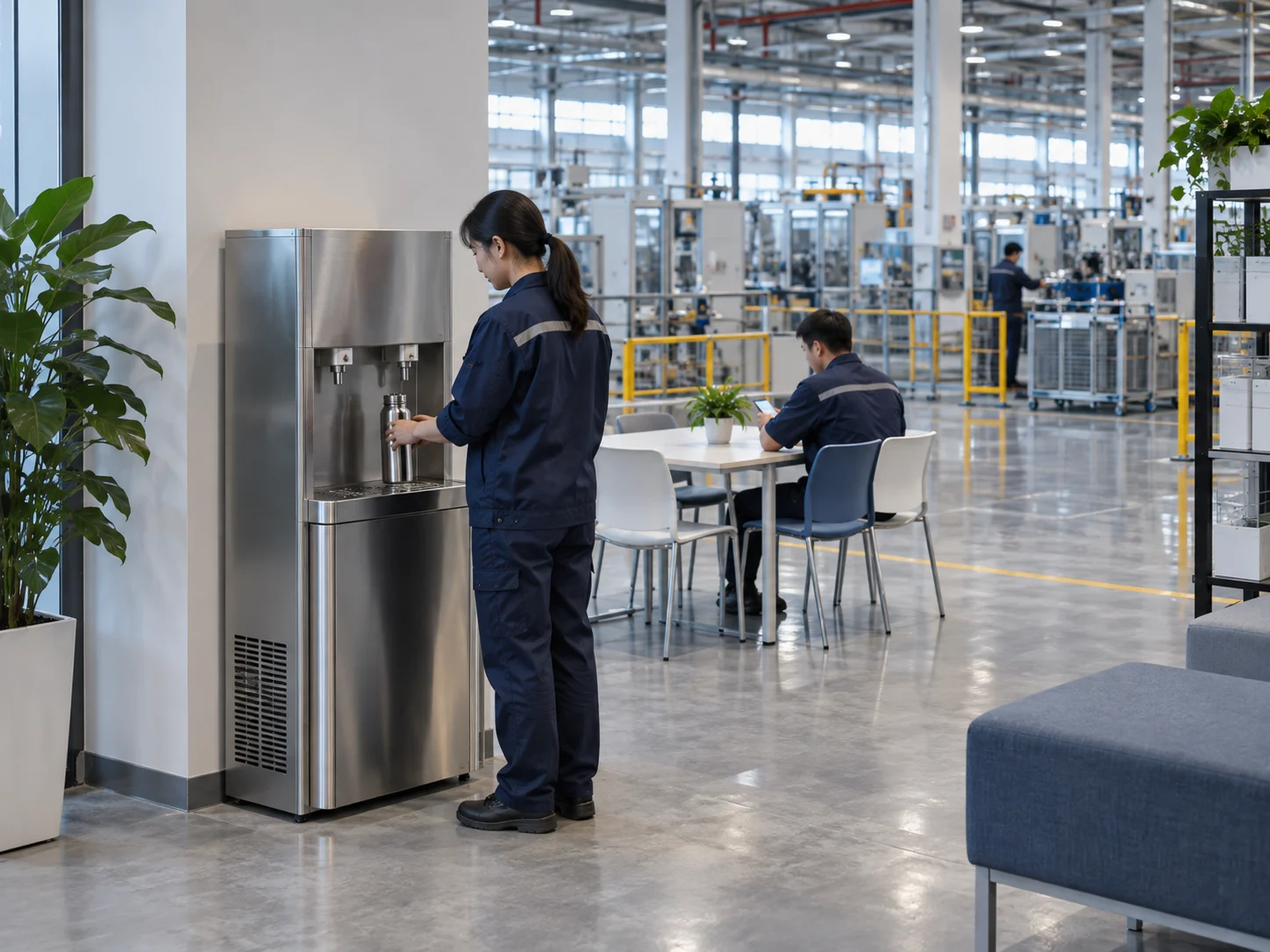
Production employees use the points across shifts; administration and procurement coordinate purchasing; facilities and maintenance teams review placement, utilities and service access.
Plan convenient access around shift changes, shared points and the actual drinking routine.
Make peak periods, point layout, utilities and maintenance windows part of the selection review.
Review shift patterns, break windows and walking routes to understand when people arrive at shared points together.
Map work areas, existing water points and practical routes before deciding whether distributed equipment or a coordinated system deserves review.
Employee count alone does not establish equipment capacity. Discuss observed peaks, water choices and how the site is operated.
Plan cleaning, filter access, repair coordination and service windows around the facility's work schedule.
The useful starting information is the site schedule and layout, not an assumed people-per-machine figure.
Share workforce ranges, shifts, concentrated break periods, water-temperature needs and current point locations.
Check water source, power, drainage where required, pipe routes, access and practical equipment locations.
Compare distributed points with a central system only where several points, site routes and operating needs make integration worth assessing.
These published categories are starting points, not a capacity guarantee. Confirm exact models, configurations, availability and suitability after reviewing the site.
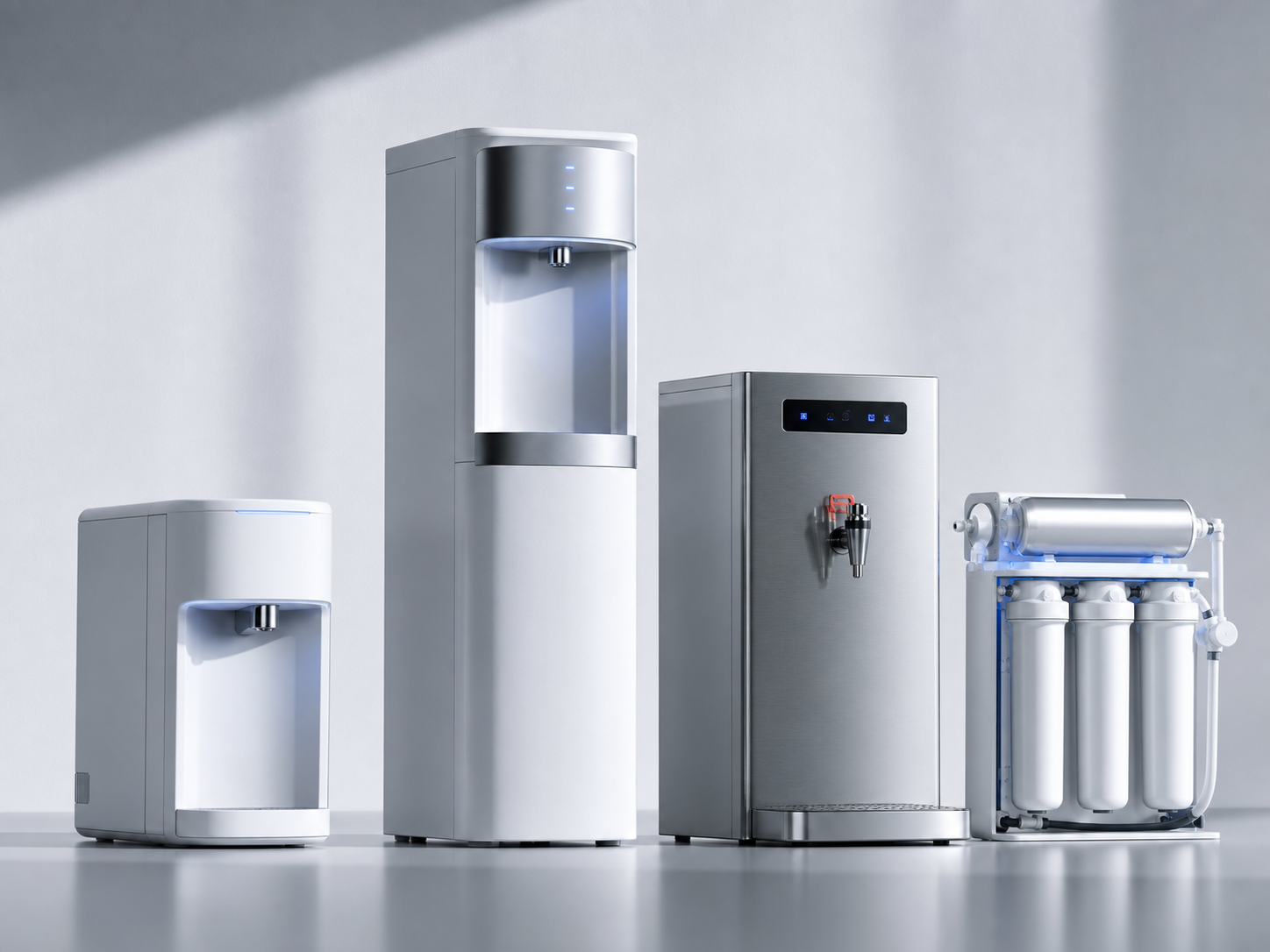
Distributed drinking points
A category to consider when the site needs drinking points near separate work or rest areas; placement and quantity depend on actual routes and peak use.
Explore a distributed arrangement without assuming a universal equipment count.
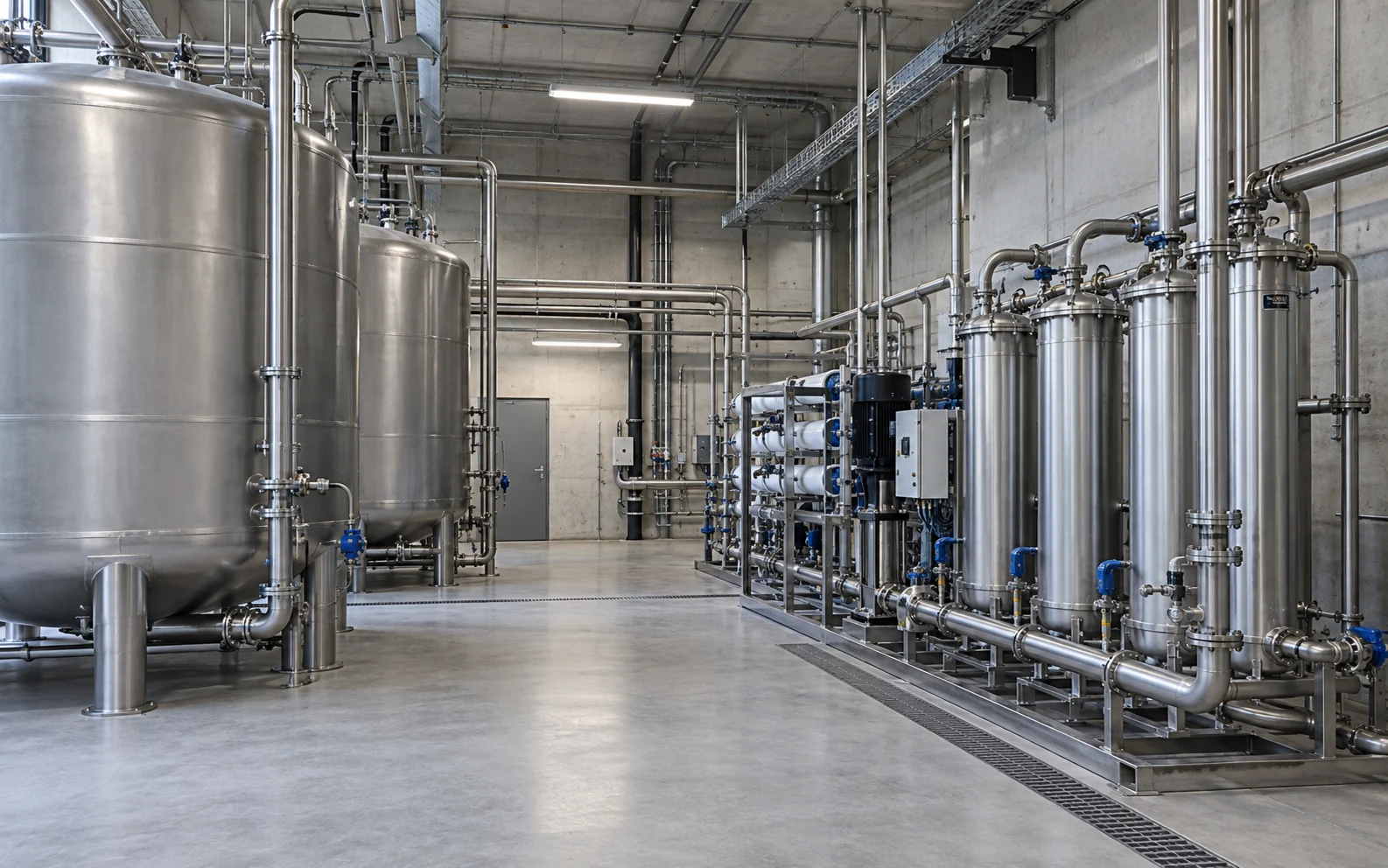
Multi-point system option
Review when a project has several points and coordinated pipe routes; it is not a default requirement for every factory.
Assess whether a shared system matches the facility layout and installation conditions.
Public category pages help compare equipment directions. Product capacity, configuration and sale availability must be confirmed for the specific project; no runtime or output figure is assumed here.
The existing floor-standing and central-system pages provide real product-category entry points.
Water, power, drainage, pipe routes, access and shift patterns inform the final arrangement.
Workforce size and equipment quantity require project review; this page makes no per-unit headcount or continuous-output promise.
For equipment orders in mainland China, the published standard policy includes nationwide free on-site installation; filters and parts are excluded. Extra pipework, drilling, water or electrical alterations may incur separate charges. Confirm access and work windows with the site. Overseas scope must be confirmed for the destination.
Review installation and maintenance serviceShare shift schedules, break windows, current point locations, water preferences and observed queues. These details support a site review; employee totals alone do not establish equipment capacity.
Map work zones, travel routes, shared rest areas, utilities and busy periods. The project team can then compare point locations and categories against the actual layout.
Consider it when several points and site pipe routes make coordinated supply relevant. Compare it with distributed equipment and confirm building conditions before selection.
Confirm water source, power, any required drainage, equipment access, pipe routes and whether extra construction or electrical work is needed.
Assign cleaning and filter-check responsibilities, confirm the selected filter and access needs, then agree service timing around factory operations and the applicable regional policy.
factory
Share the shift pattern, busy periods, point locations, water needs and site utilities. The team can review suitable categories and project conditions.